Seán Clárach Mac Domhnaill (Rath Luairc, Corcaigh)
Author’s photograph (2026)
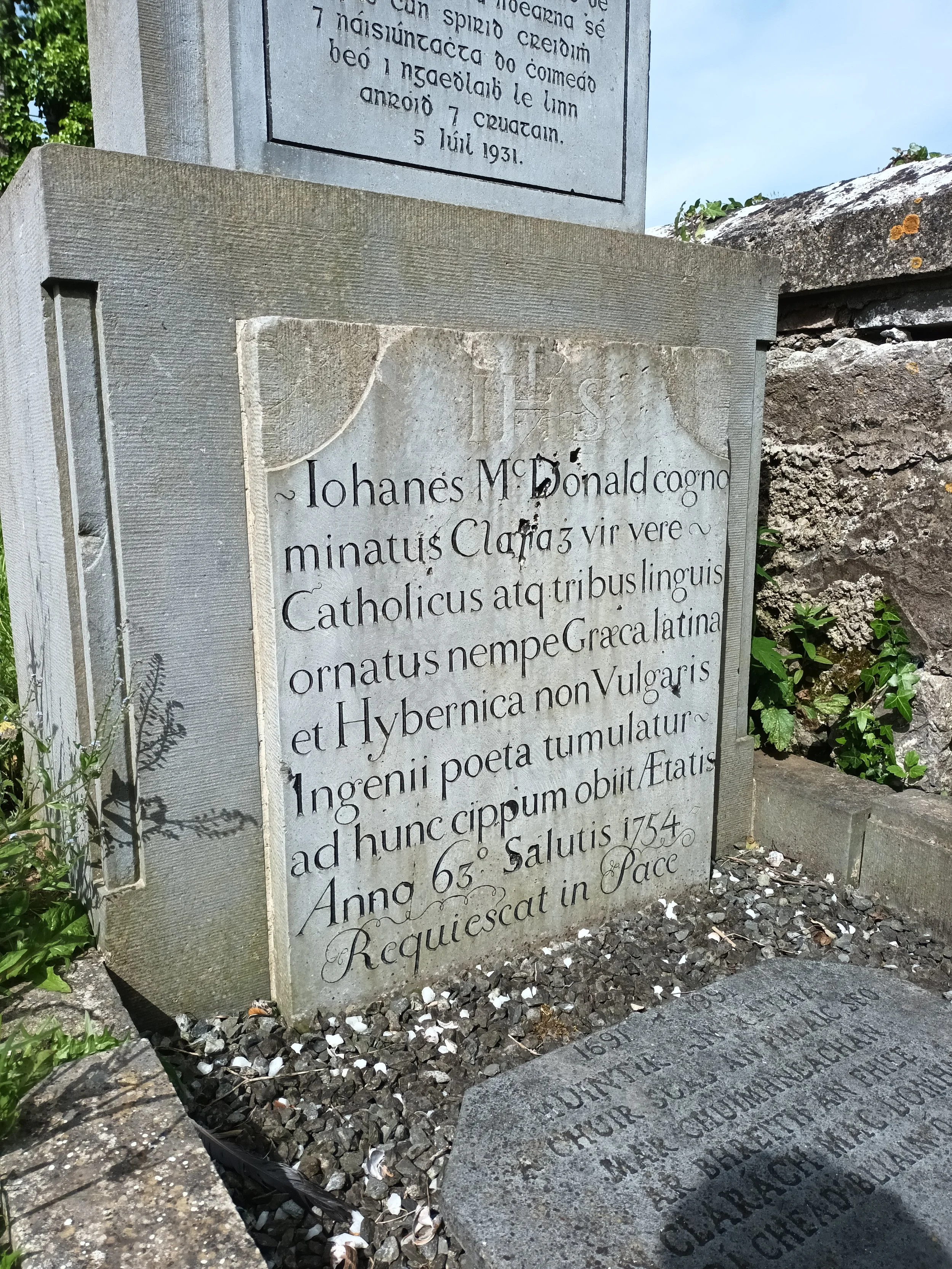
IHS
Iohanes Mc Donald, cogno-
minatus Clárach vir vere ~
Catholicus atq(ue) tribus linguis
ornatus nempe Græca latina
et Hybernica non Vulgaris
Ingenii poeta tumulatur ~
ad hunc cippum obiit Ætatis
Anno 63 Salutis 1754
Requiescat in Pace
IHS
John McDonald,
named ‘Clárach’, a truly
Catholic man and learned in
three languages, namely Greek, Latin,
and Irish, a poet of rare intellect,
is buried by this stone. He died
in his sixty-third year
and in the year of our Salvation 1754.
May he rest in peace.
An inscription in three languages, featuring Latin main text, the Irish nickname clárach (‘broad-faced’), and the English surname McDonald. The headstone was in situ in 1821 when a passing tourist recorded it; it is not known when it was first erected (Ó hÓgáin 2011). A photograph of the grave in a 1902 edition of his poems, edited by Pádraig Ó Duinnín, shows an old, weathered headstone different in shape to the one now at the grave; The Cork Examiner, however, reporting on the celebrations in its edition of 9 May 1931, mentions the decision ‘to retain the historic stone’ and insert it as part of the new memorial. Perhaps, then, the original stone was recut, restored, or replaced with the original inscription; the stone is well kept and in good condition today.
A new memorial cross and Irish inscription was commissioned and unveiled 5 July 1931, with speeches by Fr Dineen and others and plentiful press coverage. On 13 July 1991, the poet’s 300 birthday, another inscription, in Irish and English, was unveiled. The monument thus is in three parts, a combination of different eras of commemoration.
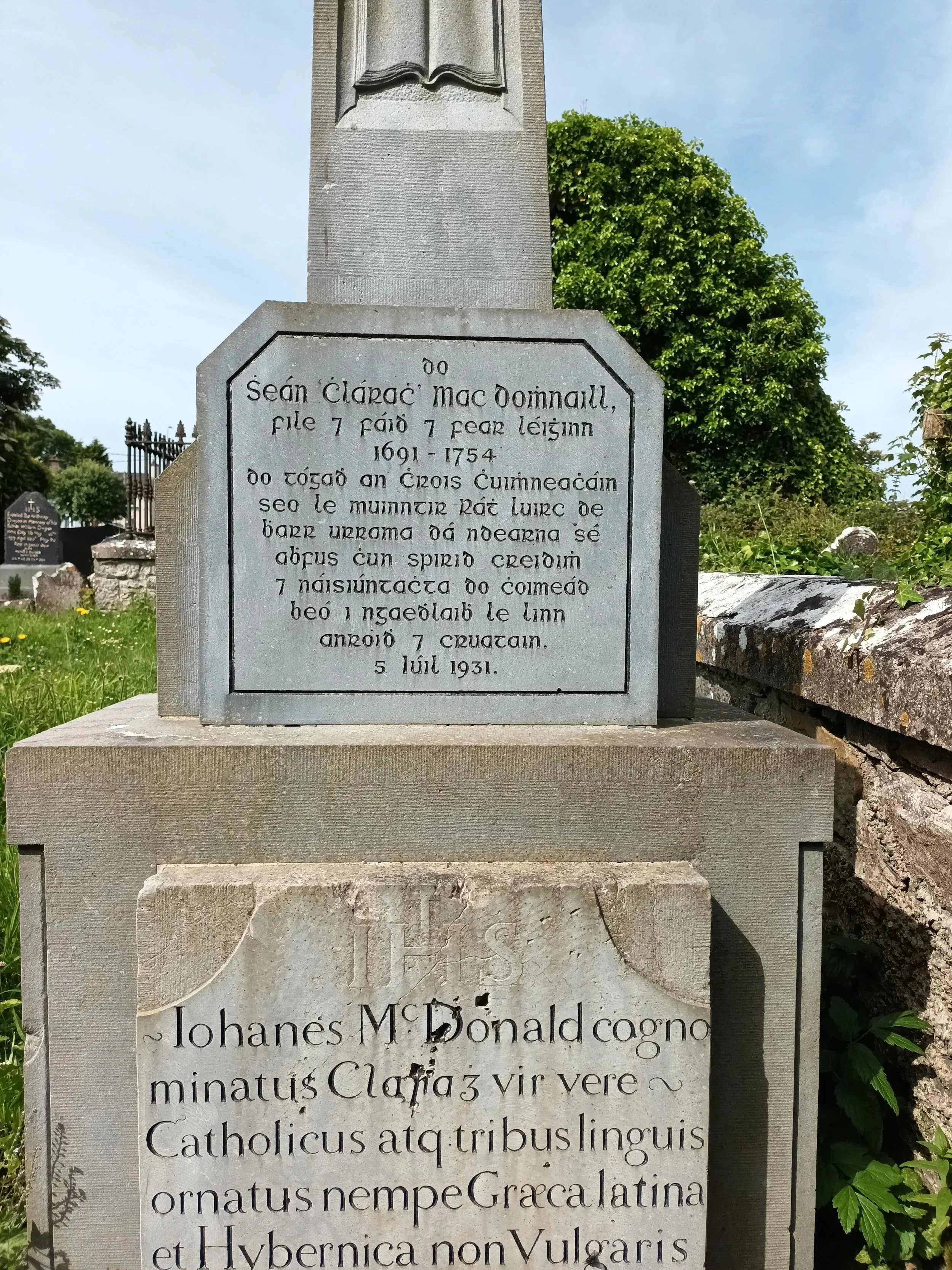
Of interest from a epigraphic point of view is the presence of three languages on the Latin headstone, its adoption of the Roman tradition of nicknames (cognomina) inspired by the person’s physical characteristics (cf. ‘Brutus’, ‘Cicero’ etc.), and, perhaps, its nod to the idea of the trilingual scholar, St Jerome being the most well known example. (It is hard to say whether Aulus Gellius’ report of Ennius’ line - that he had three hearts because he could speak Greek, Latin, and Oscan - would have been known to the commissioner of the inscription).
do Seán ‘Chlárach’ Mac Domhnaill
file 7 fáidh 7 fear leighinn
1691-1754
do tógadh an chrois chuimhnecáin
seo le muintir Ráth Luairc de
bharr urrama dá ndearna sé
abhfus chun spirid creidimh
7 náisiúntachta do choimeád
beó i ngaedhlaibh le linn
anroidh 7 cruatain
5 Iúil 1931.
[For Seán ‘Clárach’ Mac Domhnaill, poet and prophet and scholar, 1691–1754, for whom this cross is placed in remembrance by the people of Rath Luairc out of respect for what he did here to keep the spirit of belief and nationhood alive in the Irish language in times of hardship and want. 5 July 1931.]
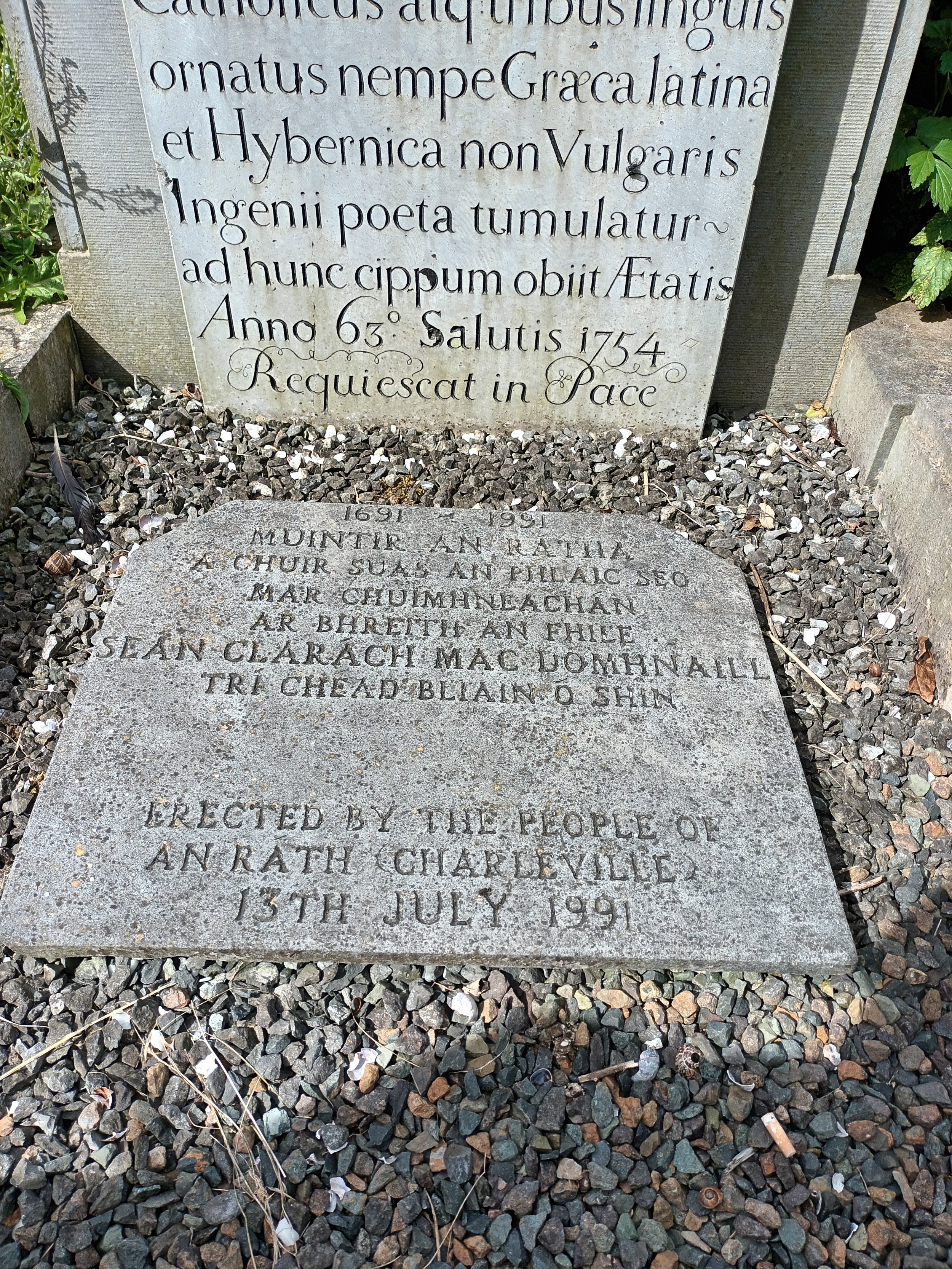
1691-1991
Muintir an Ratha
a chuir suas an phlaic seo
mac chuimceachán ar bhreith an fhile
Seán Clárach Mac Domhnaill
trí chéad bliain ó shin.
Erected by the people of Charleville
13th July 1991.
[1691-1991 The People of Rath Luairc put up this monument to mark the birth of the poet Seán Clárach Mac Domhnaill three hundred years ago. Erected by the people of Charleville 13th July 1991].
See further:
Éamonn Ó hÓgáin (ed.), Seán Clárach Mac Domhnaill (Dublin: Field Day, 2011).
https://www.dib.ie/biography/mac-domhnaill-sean-clarach-a5030
https://www.ainm.ie/Bio.aspx?ID=1354&AspxAutoDetectCookieSupport=1